Moniheli story
2007-2010
The founding of the organisation
In spring 2007, the multiculturalism association Familia Club decided to apply for funding for a project to find out whether there was a need and a place for tighter cooperation among multiculturalism associations. They often received enquiries on the subject. The organisation obtained funding for the project and during the year the project workers interviewed several dozen representatives of associations and public authorities, presented the project and identified expectations and wishes for cooperation and social influence.
According to the report, cooperation was deemed necessary, and Familia Club received follow-up funding for 2009-2010 for the Helsinki Metropolitan Area Immigrant and Multicultural Associations Together project, or the Moniheli project for short.
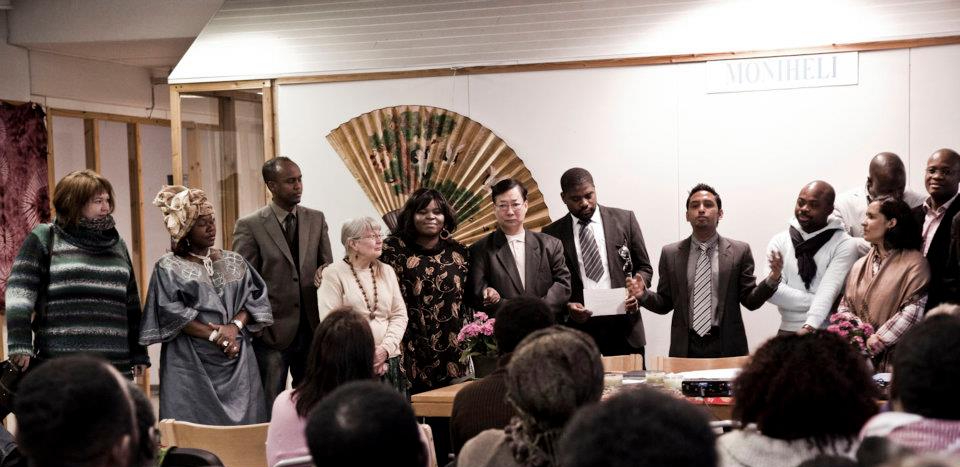
Towards the end of the project led by Familia Club, 31 multicultural organisations founded Moniheli on 17 April 2010. At the inaugural meeting, a 16-member board was formed and four deputy members elected. A six-member advisory board was also formed. Mohammad Shabbir was elected as the first Chairperson of Moniheli. Moniheli was officially registered with the Patent and Registration Office on 22 September.
2011-2015
Since its creation, Moniheli has developed its organisational structure, strengthened the cooperation between different organisations and increased its membership. Once the organisation had stabilised, the work focused particularly on increasing engagement. The organisation wanted to represent a broad range of actors and their stronger collective voice in society. In the early years, the The Finnish Refugee Council Järjestöhautomo was Moniheli' mentor.
In 2012 Moniheli received an EU grant (SOLID) to increase immigrants' participation in the municipal elections, and under iCount 2 and 3 we encouraged them to contribute to society in different ways. This work has continued with the Our Election campaigns.
Moniheli was elected to The Advisory Board for Ethnic relations (ETNO) for the first time in 2012.
Moniheli has participated in the World Village Festival in Helsinki since 2011 and has been the main organiser of the Multicultural Independence Day since the organisation was founded. In the first years it took place at the Cultural Centre Caisa.
2016-2021
Since 2016, Moniheli's activities have been funded by the Funding Centre for Social Welfare and Health Organisations (STEA). It has included both member organisation grants and project funding, which has allowed established forms of activity and covering a wider range of topics.
Vuodet 2019-2020 olivat järjestön historiassa nopean kasvun vaihe, ja silloin käynnistettiin lukuisia uusia hankkeita eri teemoista. Monihelin henkilökuntaan liittyi eri kysymysten asiantuntijoita, minkä myötä työmme yhteiskunnallinen vaikuttavuus lisääntyi.
In 2020, the pandemic had a major impact on the organisation's work, with many events going online, including the World Village Festival, a joint event of many NGOs. The Multicultural Independence Day has been celebrated on 6 December since 2006, bringing people together to celebrate their old or new homeland, Finland, but it too had to be held online.
Finished projects
Kumppanuudessa
The Kumppanuudessa project, implemented in cooperation with the Ministry of Economic Affairs and Employment, was aimed to strengthen networking, cooperation and the receptiveness of society in the field of integration.
The project provided training for both NGO and public sector actors on equal partnership. NGOs were also supported in promoting their activities, for example by organizing Järjestöt tutuksi events.
The project worked in close cooperation with the Partnership Programme for Integration.
Luontokoti
The Luontokoti project, a joint project of Moniheli and the Marttaliitto, integrates immigrants into Finnish nature and home gardens.
The aim of the project was to strengthen immigrants' inclusion and encounters by introducing them to Finnish local nature, natural products and home gardening in nature- and climate-friendly ways, together with Martha Association's experts and volunteers.
In 2022-2024, we organised activities across Finland, and national online trainings. The project included Uusimaa, Southwest Finland, Pirkanmaa, South and North Karelia.
Mikki Sulle
Mikki Sulle was Moniheli’s pilot project, which strengthened the participation of young people who have grown up between two cultures in Finnish society.
The project organized discussion events between young people, parents, educational institutions, and authorities, bringing communities and authorities closer to each other.
Terkku
The goal of the Terkku project was to promote the health of immigrants, increase the capacity of health organizations and professionals to serve clients from different cultural backgrounds, strengthen and coordinate cooperation between immigrant and multicultural organizations and health organizations, and train cultural mediators to support the development of social and health services to be more culturally sensitive.
Explore the materials of the Terkku project on the project’s webpage:
OmaPolku
Moniheli is involved in promoting educational equality for young people with an immigrant background. The goal of the OmaPolku project was to strengthen the capacity of immigrant parents to support their children in choosing an educational path, enhance the cultural sensitivity skills of guidance counselors in working with young people with an immigrant background and their parents, and develop interaction and cooperation between immigrant parents and guidance counselors at the stage when a young person is planning their post-basic education pathway.
The OmaPolku project organized peer support activities for parents in multiple languages and published several materials, such as the "From Basic Education to Secondary Studies" guide. You can find all the materials on the project’s webpage:
Working in Finland project
The Working in Finland project developed models to promote the employment of highly skilled immigrants. The project was funded by the European Structural Funds.
Through the project, Moniheli met around 300 highly qualified international jobseekers over an 18-month period. We supported their job search through training, peer mentoring, CV clinics, coaching groups, individual counselling and numerous events. The mentors were highly skilled immigrants who were employed in their field.
Almost all participants valued the project as having helped them in their job search. The project also made it possible for several participants to find a job or a traineeship.
Everybody's Elections
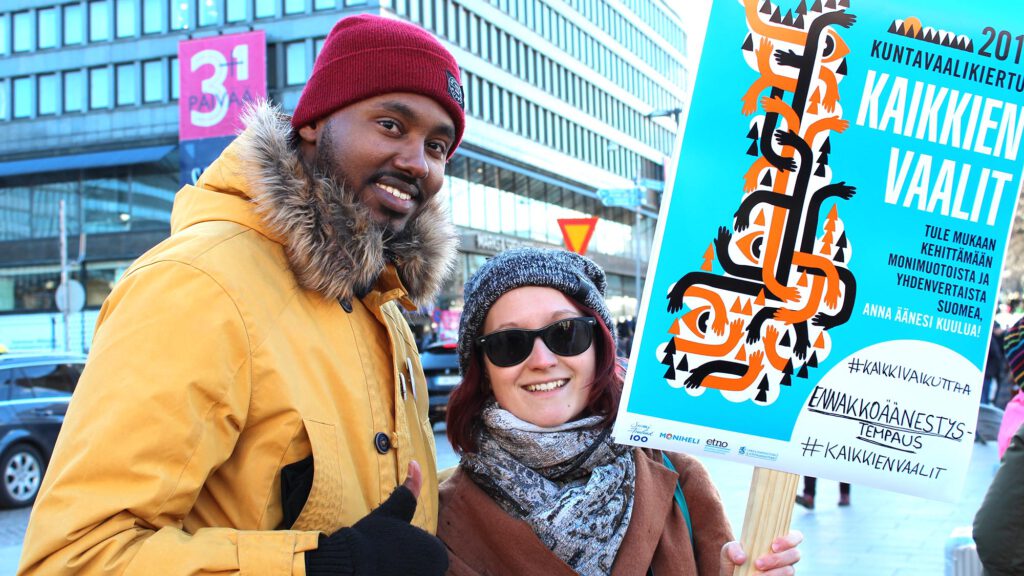
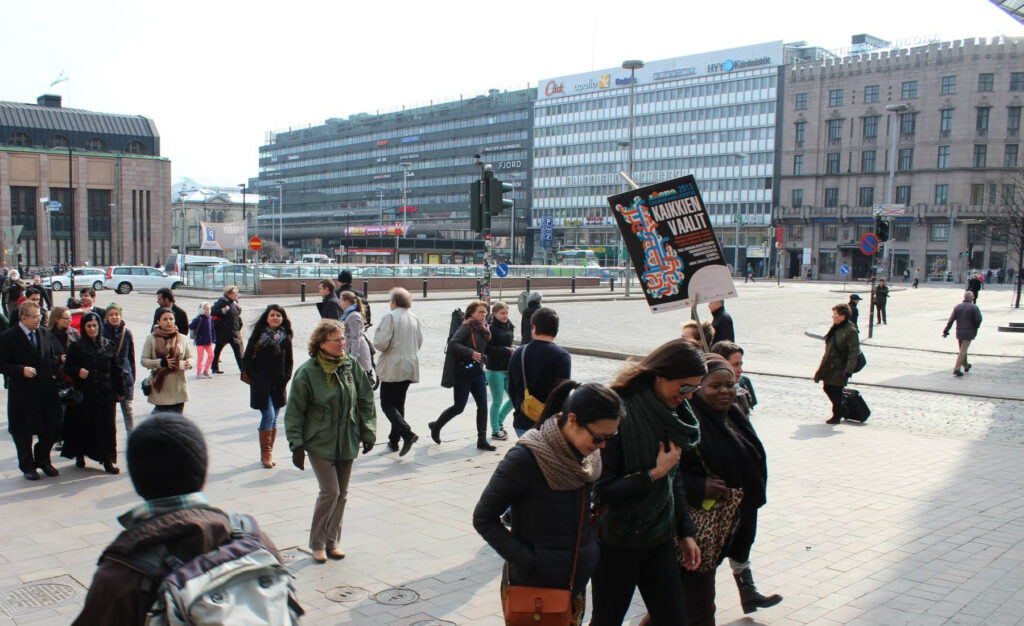
With support from the Ministry of Justice, Moniheli organised the Kaikkien Vaalit (Everybody's Elections) project between 2015 and 2019, which consisted of tours with election panels in 2015 and 2017. In 2019, we organised activation workshops to raise the concerns and aspirations of foreign language speakers with election candidates and decision-makers. From the end of 2019 onwards, Kaikkien Vaalit continued as a project called Municipal Democracy for All!, creating links and interactions between city decision-makers and foreign language speakers.
In 2021, because of the pandemic, our campaign was largely online. In March-April 2021, as part of the Kaikkien Vaalit project, we organised an online municipal election panel tour. In these events, we explored the themes of social diversity and internationalisation, as well as issues that affect everyone at local level.
Over the years, Moniheli's democracy activities have been supported by the City of Helsinki, the Finland 100 Jubilee Fund, the Ministry of Justice and ETNO, among others.
iCount
The iCount project was launched in 2012. The aim of the project was to provide as much information as possible about the right to vote in the different elections in Finland and the importance of voting. The information was produced in different languages. We have actively sought to increase dialogue between foreign-language speakers and decision-makers, especially in the run-up to elections, so that foreign-language voters, whose issues are decided in politics, can also participate on an equal footing.