
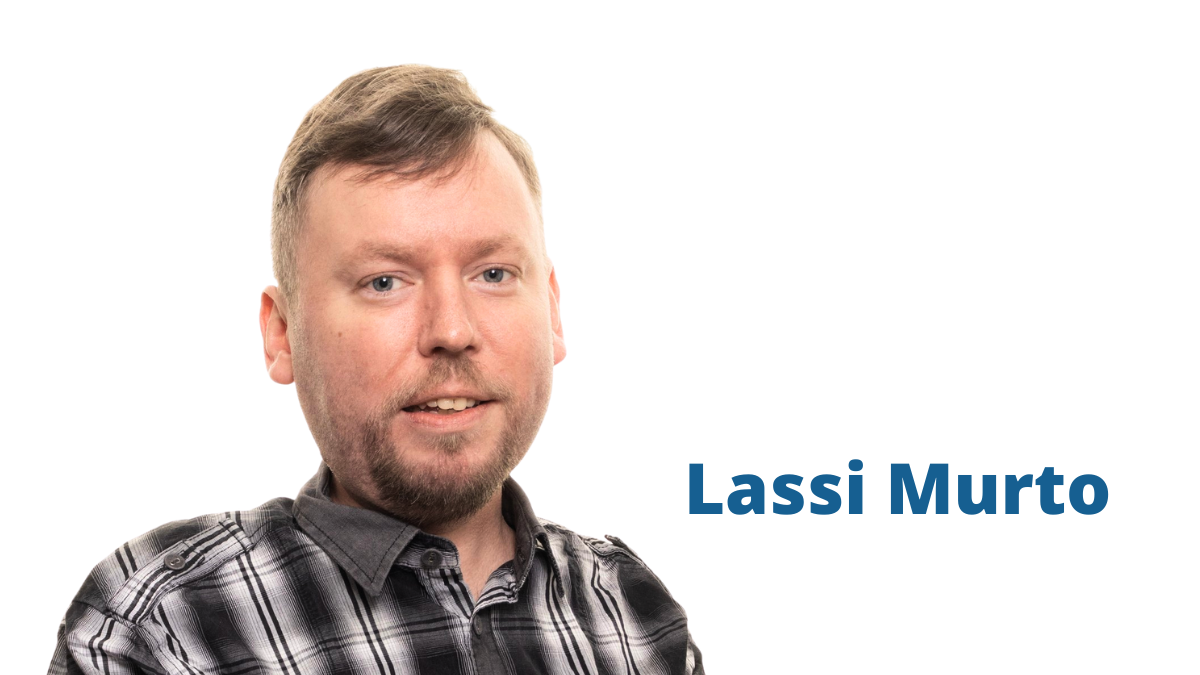
In Finland, integration is often discussed as a process: language courses, service paths, and indicators. What is asked less often is who is left unseen by these processes. Disabled migrants frequently fall between integration policy and disability policy – into an administrative blind spot where responsibility is fragmented and people are left waiting. Instead of systems, this text examines integration from the perspective of people.
In Finnish integration discourse, a tidy and controlled narrative prevails. Integration is understood as a process that can be guided, measured, and evaluated: language skills improve, employment progresses, and social participation follows.
The process is logical and administratively clear – and fundamentally incomplete.
It tells us nothing about those whom the system does not recognise.
In my everyday life, integration does not begin with an official decision, nor does it end with an indicator. It happens at the kitchen table.
I am a person with a severe disability, and I have worked as an employer for over ten years. I have employed several people with migrant backgrounds as my personal assistants. Many of them began their work in Finland without strong Finnish language skills. Communication has been built through English, gestures, and shared daily routines. The work has taught language, trust, and society – on both sides.
In this context, integration has not been a service or an intervention, but a reciprocal social relationship. Work, responsibility, and shared everyday life. I have been an employer, but also part of another person’s integration. They have been employees, but at the same time have enabled my independent life and my full participation in society.
Integration is not a process that can be administered. It is a relationship that only emerges when a person is given a place in shared everyday life.
Yet it is precisely this form of agency that too often remains outside integration debates.
The Kitchen Table Is Not Open to Everyone
Not everyone has work, networks, or structural conditions that allow integration through everyday life. Not everyone has a kitchen table to gather around. Those who arrive in Finland with disabilities are particularly invisible.
Disabled migrants are positioned at the intersection of two policy domains: integration policy and disability policy. In practice, they are often excluded from both. In integration policy, they are seen as exceptions, in disability policy, as a marginal special group. Administratively, they are considered “too complex.”
This is no coincidence. It is a structural phenomenon that can be described as anadministrative blind spot: responsibility is dispersed, processes run in parallel, but the person remains stuck in place.
The integration system assumes functional capacity, flexibility, and self-direction. The disability services system, in turn, assumes linguistic and cultural fluency as well as familiarity with administrative processes.
When neither assumption holds, responsibility disappears into the seams between administrative sectors.
And waiting becomes the norm.
And waiting is the heaviest state a person can be in.
Intersectional Invisibility
Disability and a migrant background are not merely two separate characteristics. Together, they form an intersectional position in which forms of discrimination do not simply accumulate but multiply. A disabled migrant encounters barriers that neither group faces on its own.
Service systems often fail to recognise this intersecting reality. Disability is treated as a technical issue, migration as an administrative process. The person is left unseen between categories.
Disabled migrants are not excluded because they are difficult to reach, but because systems have been designed without seeing them.
It is important to state this clearly: a system that does not recognise disabled migrants is not neutral. It is exclusionary.
This is not the fault of individual professionals. It is a question of structures built on the assumption of an “average user” – a person who does not exist.
Disability Does Not Begin at the Border
One of the most persistent misconceptions in integration discourse is the idea that disability is something that “emerges” only within the Finnish service system. In reality, many people arrive in Finland already disabled. They have lived histories, skills, survival strategies, and agency – and often experiences of war, poverty, or displacement.
Yet they are frequently encountered primarily as objects of care and control, rather than as social and civic actors. This mindset narrows a person’s role and transforms integration from participation into governance.
Integration is not about adapting to a single normative mould.
It is a negotiation over shared space and the right to belong to society as oneself.
When a Requirement Replaces an Opportunity
Integration does not happen through willpower alone. It requires accessible services, effective interpretation, assistive devices, personal assistance, and time. Without these conditions, integration becomes a requirement rather than an opportunity.
Integration without support is not an opportunity. It is a normative demand placed on people who lack the actual conditions to meet it.
Yet this demand is not directed at systems, but at individuals. And that is precisely where equality begins to erode.
If a person cannot integrate without support, but society does not provide that support, whose failure are we really talking about?
Silence does not mean the absence of a voice.
It means the absence of a listener.
A Measure of Civic Maturity and an Open Continuum
Supporting disabled migrants is not special treatment. It is the core of equality. When people receive the support they need, they can participate, study, work, and be members of society. Without support, they are left on the margins – not by choice, but because of structures.
Civil society plays a crucial role here. Non-governmental organisations see what statistics do not reveal. They hear voices that administrative boundaries silence. They can act as bridges when systems fail to meet.
A society’s level of civic maturity is not measured by how well the majority gets by, but by who are left in the blind spots – and what we do when those blind spots are made visible.
I write this as a disabled person, an employer, and a civil society actor who sees integration both in everyday life and through structural lenses.
This conversation does not end with this text.
It is only the beginning – and that is precisely why we must dare to engage with it now.