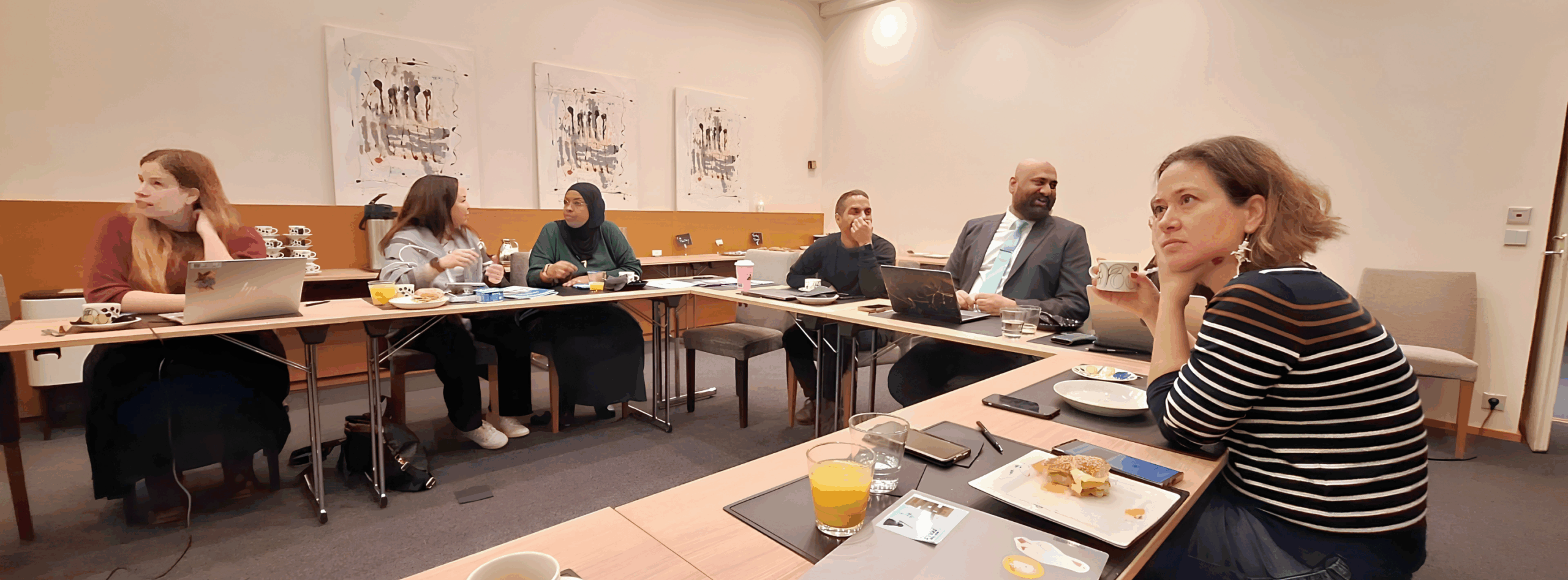
The board is one of the most important parts of an association. It follows the association’s statutes, uses its resources responsibly, and makes sure that decisions are carried out.
Board members do not need to know everything before they start. This guidance is written especially with small, board-led associations in mind. In these associations, the board may handle many practical tasks itself. In associations with employees, an executive director, coordinator or other staff member may handle daily operations. However, the board should still make sure that roles, responsibilities and decision-making powers are clear.
This article explains the most common board roles, what the board is responsible for as a group, and where to find more detailed guidance.
Table of contents
What is the board?
The board is the group of elected people responsible for running the association between general assemblies. General assemblies are meetings where members make the association’s most important decisions.
Read more about them in our article 🔗Meetings and events – What types of meetings can an association have?
The board makes sure that the association follows its statutes, decisions, budget, and the law. The association’s statutes are its official rules. They explain how the association works and how decisions are made.
Read more about association statutes in our article 🔗Statutes of an association (guide)
🔗The Association Act states that an association must have a board with a chairperson and at least two other members.
The board does not own the association or decide everything alone. The members of the association have the highest decision-making power in matters that belong to the general assembly, such as electing the board, approving the budget, and approving the financial statements. The board’s role is to carry out the association’s activities and decisions in a responsible way.
Note: In Finnish, the board is called "hallitus ". In the English version of this article, we use the word "board”to mean the board of a Finnish registered association. Some other English texts may also use terms such as "board of directors" or "executive committee”.
What is the board responsible for as a group?
The board is responsible for managing the association’s affairs carefully, legally, and in line with the association’s purpose. Even when board members have different roles, the board is responsible as a group. This is called collective responsibility.
This means that the board can divide practical tasks between board members, staff, or volunteers. However, the whole board must understand the main issues and take responsibility for decisions. For example:
- The treasurer may prepare financial reports, but the whole board is responsible for making sure that the association’s finances are handled properly.
- The secretary may write the minutes, but the whole board must make sure that decisions are recorded clearly and correctly.
Every board member should understand the association’s purpose, statutes, finances, plans, and main responsibilities. The board’s shared responsibilities can be grouped into three main areas:
Governance and decision-making |
|
Finances and reporting |
|
Legal and practical matters |
|
The board should always work in the best interest of the association. Board members should act honestly, carefully, and transparently. This does not mean that every mistake leads to personal liability. However, board members should not ignore the law, the association’s statutes, finances, conflicts of interest, or other problems that may affect the association.
Good documentation protects both the association and the board. Clear agendas, minutes, receipts and financial reports show that decisions were made properly.
Some specific responsibilities, such as finances, employer duties, confidentiality, and conflicts of interest, are explained in more detail later in this article.
Who sits on the board?
Every registered association must have a board. The association’s statutes should say how many board members there are, how they are elected, and how long their term lasts.
Common board roles include:
- chairperson,
- vice-chairperson,
- secretary,
- treasurer,
- other board members.
Only the chairperson and at least two other board members are legally required. Other roles, such as vice-chairperson, secretary, and treasurer, are common and useful, but they are not always required by law. The association’s own statutes may require them.
In small associations, one person may sometimes have more than one role. For example, the secretary and treasurer may be the same person. However, the board should always make sure that responsibilities are clear and that no one person has too much unchecked control.
Chairperson
The chairperson leads the board’s work. They help make sure that the board meets regularly, makes clear decisions and follows up on agreed tasks.
Typical tasks of the chairperson include:
- leading board meetings,
- helping prepare meeting agendas,
- making sure board members receive enough information before decisions,
- supporting cooperation between board members,
- making sure decisions are followed up and carried out,
- representing the association in meetings with partners or authorities,
- signing documents on behalf of the association, if the statutes allow it,
- making sure the board follows the association’s statutes and good governance practices.
The chairperson is often the public face of the association, but they do not lead the association alone. Important decisions should be made by the board, and all board members should understand what is being decided.
Vice-Chairperson
The vice-chairperson supports the chairperson and can act in their place when needed.
The association is not legally required to have a vice-chairperson, unless the statutes say so. However, it is often a good idea, because it makes the board’s work more stable if the chairperson is absent or unavailable.
The exact role depends on the association’s statutes and the board’s own division of tasks. Typical tasks of the vice-chairperson include:
- replacing the chairperson when they are absent,
- supporting the chairperson in preparing and leading board work,
- taking responsibility for agreed tasks or projects,
- signing documents if the association’s statutes give this right.
Secretary
The secretary helps the board keep its administration clear and organised. This role is important because associations must be able to document their decisions and keep important information accessible.
Typical tasks of the secretary include:
- preparing meeting agendas with the chairperson,
- writing minutes of board meetings,
- keeping meeting documents organised,
- making sure decisions are recorded clearly,
- helping prepare the annual report,
- maintaining or supporting the member register,
- preparing notifications to the Finnish Register of Associations (PRH) when board members, signatories, address details, or statutes change,
- keeping important documents accessible for the board.
The secretary supports the board’s work but does not carry the board’s legal responsibility alone. For example, the board as a whole is responsible for the member register, even if the secretary updates it in practice.
This is why clear documentation is important. Good minutes help the association remember what was decided, follow up on tasks, and show that decisions were made properly. They also support transparency and can protect both the association and the board if questions arise later.
Find agenda and minutes templates in our article 🔗Meetings and events – How are meetings prepared?
Treasurer
The treasurer helps the board understand and monitor the association’s finances.
A treasurer is not always legally required, unless the association’s statutes say so. However, the role is strongly recommended, especially if the association receives grants, collects membership fees, hires staff, or organises activities with costs.
Typical tasks of the treasurer include:
- monitoring income and expenses,
- following the budget during the year,
- preparing financial reports for the board,
- making sure invoices and receipts are handled properly and kept,
- coordinating bookkeeping or working with a bookkeeper,
- helping prepare the financial statements,
- informing the board about financial risks.
In a small association, the treasurer may do much of the practical bookkeeping. In a larger association, the bookkeeping may be handled by an external accountant, and the treasurer’s role may be to monitor, coordinate, and report to the board.
The treasurer may handle many practical financial tasks, but the whole board is responsible for financial oversight. The board should understand the association’s financial situation well enough to make responsible decisions.
Read more about budgets, bookkeeping, financial statements and operations inspection in our article 🔗Financial management
Other board members
Board members who do not have a specific role are still fully part of the board. Their role is not passive.
All board members share responsibility for the board’s decisions and for the association’s work. They do not need to be experts in everything, but they should understand what the board is deciding.
Typical tasks of a board member include:
- attending board meetings and reading materials in advance,
- taking part in discussions and decisions,
- asking questions when something is unclear,
- following the association’s activities, finances, action plan and budget,
- completing agreed tasks and supporting activities such as events, communication, fundraising or member work,
- acting in the best interest of the association, respecting confidentiality and avoiding conflicts of interest.
A board member should not simply approve decisions without understanding them. Asking questions is part of good board work. It helps the board make better decisions and prevents problems.
How does the board meet and make decisions?
The board makes decisions in board meetings. These meetings help the board follow the association’s activities, finances, plans, and responsibilities. Board meetings should be prepared carefully.
- A clear agenda helps the board know what will be discussed and what decisions need to be made. The agenda should follow the association’s statutes and include the matters that the board needs to handle.
- Minutes should be written for each board meeting. They show what was discussed, what was decided, and who is responsible for the next steps. Clear minutes help the board follow up on decisions and can also be needed for financial administration, audits, grant reporting, or legal reasons.
Good board meeting practices include:
- sending the agenda and materials in advance,
- making sure board members have enough information before making decisions,
- recording decisions clearly in the minutes,
- agreeing who is responsible for each follow-up task,
- checking later that agreed tasks have been completed.
Board meetings do not need to be complicated, but they should be organised. Clear preparation, minutes, and follow-up help the board work transparently and responsibly.
Find agenda and minutes templates in our article 🔗Meetings and events – How are meetings prepared?
What is the difference between the board and the general assembly?
To understand board work, it is important to know the difference between the board and the general assembly.
The general assembly is where members use their decision-making power. The board prepares many matters for the general assembly, but it cannot replace the members’ decision-making power. The association’s statutes explain which matters must be decided by the general assembly.
The general assembly usually decides on matters such as:
| The board usually decides on matters related to the everyday management of the association. These may include:
|
In short, the general assembly decides on the main matters, and the board puts the approved decisions into practice.
What specific responsibilities should board members know about?
Who can sign documents and represent the association?
Signing rights mean the right to officially represent the association. This may be needed when signing contracts, using bank services, applying for funding, submitting notifications to authorities, or using digital services.
The association’s statutes should say who has the right to sign on behalf of the association. The chairperson usually has this right, unless the statutes limit it. The statutes may also allow board members or persons in certain roles, such as vice-chairperson, treasurer or secretary, to sign.
The statutes may say that one person can sign alone, or that two people must sign together. Before signing contracts or official documents, the board should check the association’s statutes and make sure that the information in the Register of Associations is up to date.
Example
The statutes may say: “The association is signed by the chairperson alone, or by the chairperson and secretary together.” This means that other people cannot sign contracts on behalf of the association unless they have been given this right.
What financial responsibilities does the board have?
All board members should understand the association’s finances at a basic level. The treasurer, bookkeeper or accountant may handle practical financial tasks, but the whole board should understand the financial situation before making decisions.
The board should regularly check:
- how much money the association has,
- what income and expenses are expected,
- whether the budget is being followed,
- whether grants are used according to their conditions,
- whether purchases, reimbursements and travel expenses are approved correctly,
- whether receipts and other financial documents are kept,
- whether bookkeeping is up to date.
The board is responsible for preparing the budget and financial statements, but the general assembly usually approves them. The board should also give the necessary documents to the operations inspector or auditor.
Board members, volunteers and employees may sometimes receive reimbursements for costs related to the association’s activities. These costs should be approved, documented and connected to the association’s purpose. Travel expenses should be approved in advance.
Good financial practices include:
- having a clear process for reimbursements that explains which costs can be reimbursed, who approves them, what documents are needed and how payments are recorded in bookkeeping,
- making sure that a board member does not approve their own reimbursement alone,
- including a short financial update in board meetings. This helps the board notice problems early.
Read more about budgets, bookkeeping, reimbursements, financial statements and operations inspection in our article 🔗Financial management.
What are operations inspectors and auditors?
The operations inspector or auditor is not part of the board. Their role is to review the association’s administration and finances.
The operations inspector or auditor is elected by the general assembly. An association must have an operations inspector if it does not have an auditor. Larger associations, or associations whose statutes or legal requirements say so, may need an auditor.
A board member cannot act as the association’s operations inspector or auditor. The role must be independent from the board. An employee or another person closely involved in the association’s management or finances should not be chosen if their independence could be questioned.
The board must give the operations inspector or auditor the documents they need, such as:
- minutes,
- bookkeeping records,
- receipts,
- annual report,
- financial statements,
- other documents related to the association’s administration and finances.
The operations inspector or auditor gives a report to the general assembly. The report helps members review how the association has been managed and decide on matters such as approving the financial statements and discharging the board from liability.
Read more about operations inspection and auditing in our article 🔗Financial management – Financial Oversight and Auditing.
What changes when the association has employees?
If the association hires even one employee, the board becomes responsible for the association’s role as employer. This is a major responsibility. The board must make sure that employer duties are handled legally and responsibly, even if practical tasks are handled by an executive director, coordinator, supervisor, payroll service or another person.
Before hiring someone, the board should make a formal decision and check:
- why the person is needed, what work they will do, and how the work supports the association’s purpose and strategy,
- whether the association has enough funding,
- who will supervise the employee and support their daily work,
- who will prepare and sign the employment contract,
- how payroll, taxes, insurance and official reporting will be handled,
- how occupational health care, workplace safety and privacy responsibilities will be handled.
If the association has an executive director or another supervisor, their role and authority should be clearly agreed. The board decides the direction, budget, major responsibilities and important employer matters. Employees and supervisors usually handle daily implementation according to their job descriptions.
Notes: Before paying someone for work, the board should check whether the payment is a salary or a fee. The name of the payment does not decide its legal nature.
What should board members know about conflicts of interest?
A conflict of interest means that a board member’s personal interest may affect, or seem to affect, their decision-making.
A board member may have a conflict of interest if, for example:
- the association wants to buy a service from that board member,
- a board member applies for paid work from the association,
- the board discusses hiring a board member’s relative,
- the board decides on a payment or reimbursement for that board member.
If there is a conflict of interest, the person should say it clearly. The board should record it in the minutes, and the person should not take part in the discussion or decision when needed. Conflicts of interest should be handled openly to protect the association and the board.
What should board members know about confidentiality?
Board work may include sensitive information. This can include personal data, employee matters, financial problems, funding decisions, conflicts, or partner discussions.
Board members should know what information can be shared with members or the public, and what must remain confidential. Confidentiality does not mean secrecy about everything. Associations should be transparent with their members. However, personal data, staff matters and sensitive negotiations must be handled carefully.
Good practices for board work
A good board helps the association move forward in a responsible and organised way. It understands the association’s purpose, follows the statutes, uses money responsibly, keeps clear records, and acts in the best interest of the association and its members.
Good board members:
- prepare for meetings by reading the agenda and attachments,
- listen to others and ask clear questions when something is unclear,
- respect decisions once they are made,
- follow up on agreed tasks,
- act according to the association’s purpose.
At the beginning of a new board term, the board should agree how it will work in practice. This helps everyone understand their role and prevents confusion later.
The board can agree:
- how often it meets,
- who prepares agendas,
- how minutes are approved and stored,
- how tasks are divided and followed up,
- who follows the association’s finances,
- who has access to bank accounts and digital services,
- who communicates with members,
- who supervises staff, if the association has employees,
- how urgent decisions are handled,
- how new board members are introduced to their role.
The board should also make sure that important documents, login details and access rights are transferred safely when the board changes.
Checklist for a new board member
A simple checklist to help new board members understand their role, key documents, finances, signing rights and upcoming responsibilities.
Want to know more?
This article gives an overview of the board’s role and responsibilities. Board members may also need to understand association administration, financial management, strategy, communication and risk management more broadly. You can find more learning materials in these resources:
Association’s basics – especially the section How to manage the association’s administration and activities?
A broad starting point for associations, with information on founding and managing an association and links to guides, templates and self-study materials on governance, finances and risk management.
Association Governance – Pakolaisapu
Clear guidance on association administration, including board roles, officers, operations inspectors, auditors and the division of decisions between members and the board.
Roadmap for board work – SIVIS (in Finnish)
A visual tool that helps the board discuss expectations, values, goals, working methods, board members’ skills, possible problems, obstacles and sources of energy. The original SIVIS material is available only in Finnish, but Moniheli provides an 🔗unofficial English adaptation of the roadmap for English-speaking readers.